How an unplanned global spotlight is reshaping perception of the GCC
In Nation Branding, few resources are more valuable, or more difficult to earn, than genuine global attention. Governments spend hundreds of millions on tourism campaigns, investment promotion, and cultural diplomacy initiatives, often achieving only modest shifts in awareness. The brutal irony of the current Middle East crisis is that it has delivered, without budget or strategy, something that decades of deliberate branding efforts only partially accomplished: it has made the world pay attention to the GCC.
At Bloom Consulting, we have tracked Nation Brand perception across dozens of countries for over two decades. We know that perception shifts rarely happen gradually, they tend to occur in moments of rupture, when an event forces a re-evaluation of what a place is and what it stands for. The ongoing crisis in the Middle East is one of those moments. And while its human costs are devastating, its perceptual effects on the GCC, some of them deeply positive and largely unintended, deserve attention.
This article, the first in a two-part series, examines the unexpected opportunities this current USA/Israel/Iran war crisis has created for the Nation Brands of the GCC: the geography lesson the world never asked for, the stereotypes that social media is quietly demolishing, the diplomatic maturity that is generating global respect, and the cosmopolitan reality of Gulf societies that is, finally, becoming visible.
The most powerful perception shifts are rarely planned. They happen when the world is forced to look, really look, at a place it thought it already understood. This crisis has done exactly that, and what global audiences are seeing is nothing like what they expected.
The geography lesson no campaign could have bought
Ask a randomly selected adult in Germany, Brazil, or South Korea to point to Oman, Qatar or a city like Riyadh on a map. Before this crisis, most would have hesitated. Ask them today, and the chances are meaningfully higher that they could do so, not because of any tourism campaign, but because they have spent time watching news coverage in which these locations, and their diplomatic role appear repeatedly.
The crisis has delivered a remarkable, if unwanted, boost in cognitive presence for multiple GCC nations. Global audiences now know how to distinguish Kuwait from Bahrain, the UAE from Saudi Arabia.
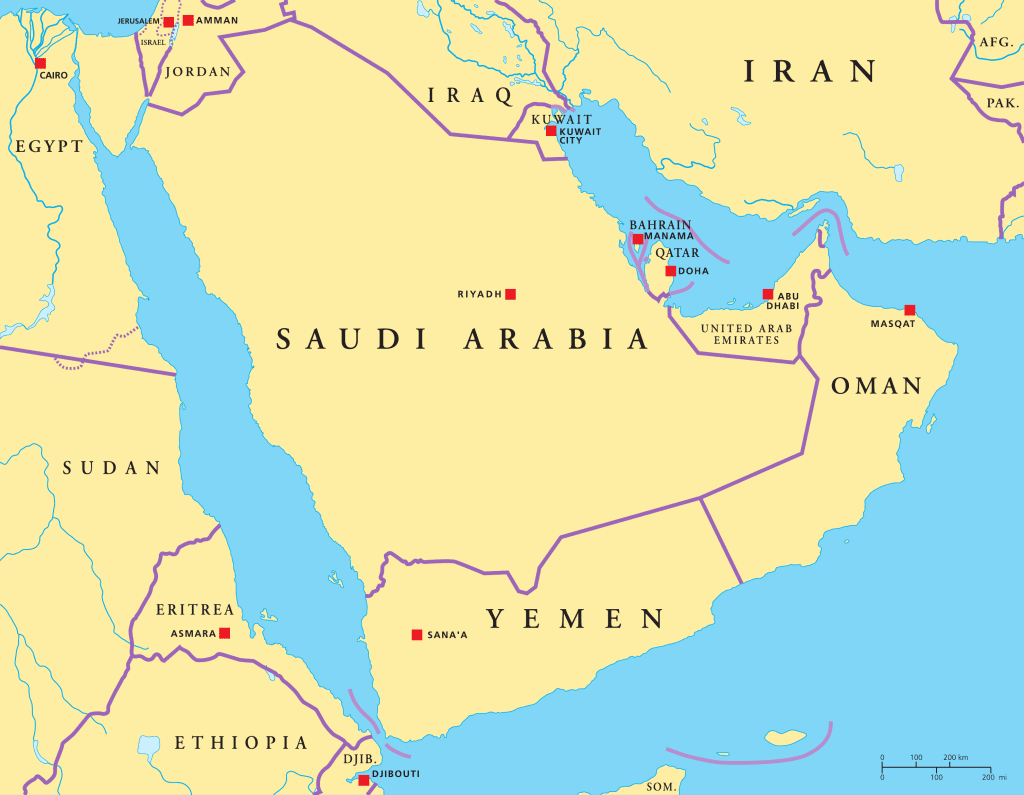
This may seem unimportant. Realistically, knowing where a country or city is located should not affect perceptions, but in some cases it does, especially when there are preconceived ideas about certain regions, such as the “Middle East.”
That’s why improving basic geographic awareness can help, particularly when reinforced by other factors, like media and social media coverage from and about the region, which can show international audiences that the Middle East is not just the cliché they may have in mind. In this context, this is not a trivial gain. Building foundational geographic and cultural awareness among new international audiences is, in fact, highly strategic. The crisis has accelerated that process dramatically, and at no cost. The strategic imperative now is to consolidate that awareness before the news cycle moves on.
The collapse of the desert cliché
There is a long-standing stereotype in Western popular culture about the Middle East, one that has persisted for generations: a region defined by sand and sun, oil wealth, opacity, limited rights, and a sense of cultural distance. What no government communications team managed to achieve at scale, social media has begun to accomplish organically. The saturation of real-time footage, journalist dispatches, resident accounts, and citizen content generated during the crisis has given global audiences something they had rarely seen before: an unfiltered, unsponsored visual reality of Gulf countries and cities.
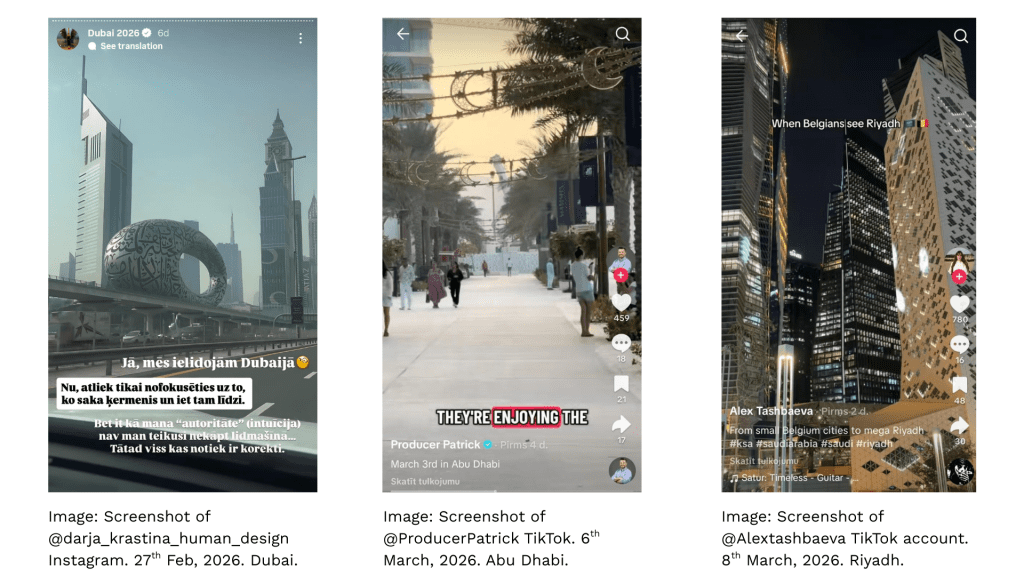
They are seeing the skyline of Doha, not a rendered architectural vision, but a real, inhabited city where people live and work, commute, meet friends, and spend weekends with their families. They are seeing Dubai’s highways not as spectacle, but as daily infrastructure; Abu Dhabi’s cultural district as a place that hosts public life; Riyadh’s new urban planning in the context of neighbourhoods, schools, cafés and offices; Muscat’s modernised waterfront as a promenade used by joggers, parents with strollers, and groups gathering at sunset.
They are seeing contemporary Arab and international professionals, journalists, academics, diplomats, entrepreneurs, speaking with authority and ease, often across multiple languages. And, in short, they are encountering a region that looks nothing like the cliché: one narrated by third parties and everyday individuals, sometimes even by people from their own nationality living and working there, which makes the culture feel relatable or at least compatible.
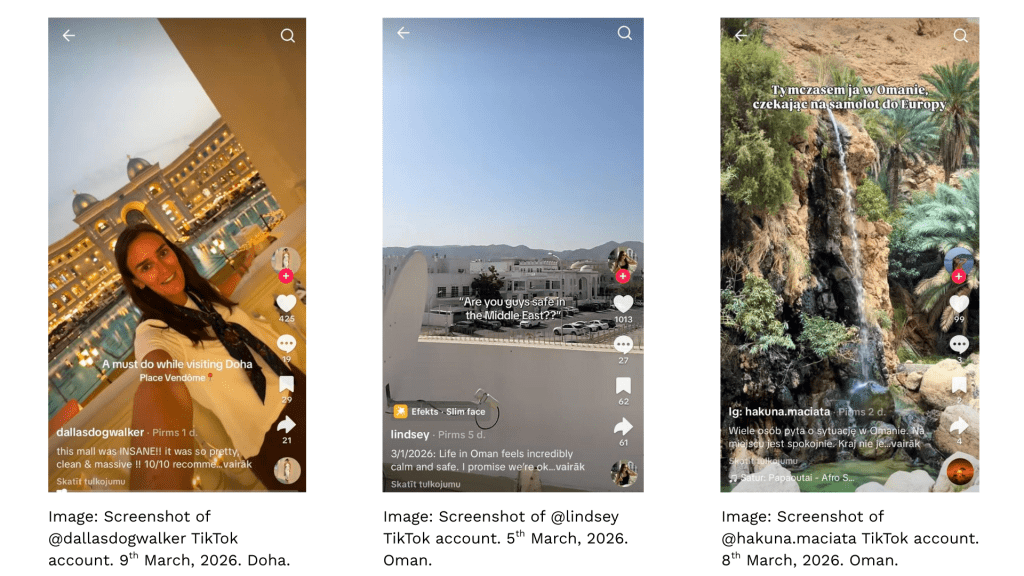
In Nation Branding terms, this is what we call “Perception through Influence”: when the world forms an impression of a place through a multilayered ecosystem of authentic, fragmented, and often unrelated sources, rather than through advertising or official government communications.
The cosmopolitan reveal: more international than the world knew
One of the most striking revelations for global audiences watching the crisis unfold has been the sheer diversity of the people they see on screen in Gulf cities. This is a region where, in several countries, nationals are a minority of the total population, where the streets, offices, restaurants, and universities are filled with people from South Asia, East Africa, Europe, the Americas, and every corner of the Arab world.
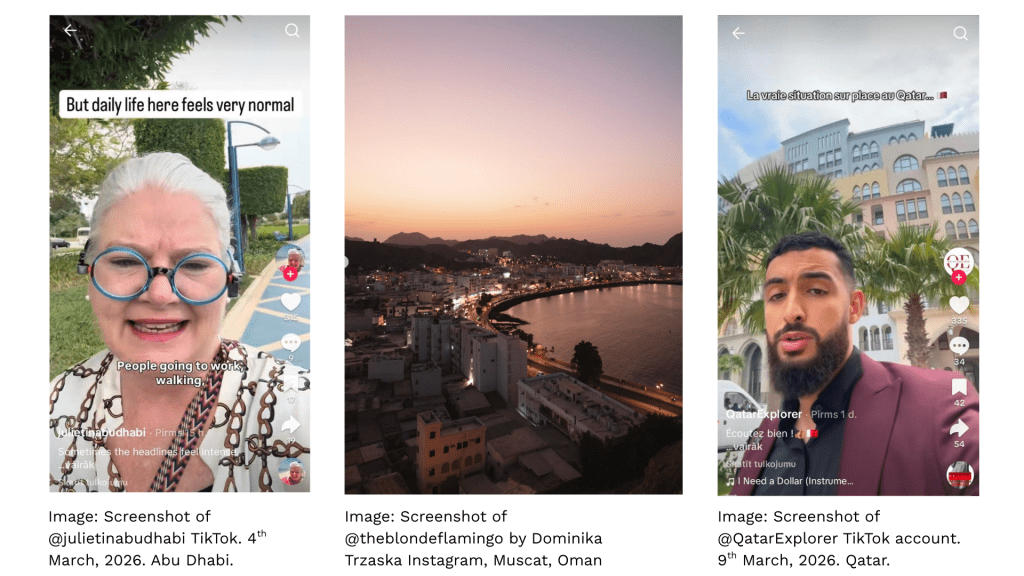
For Nation Branding purposes, this cosmopolitan reality is a major asset, particularly in the competition for global talent and international business. Highly skilled professionals choose locations not just on the basis of salary or opportunity, but on the perceived quality and openness of the society they will inhabit. A country understood to be genuinely international, comfortable with difference, experienced in accommodating diversity, holds a distinct competitive advantage.
The crisis has surfaced this reality to a global audience that had little previous reason to think about it. The window will not stay open indefinitely, but while it is, the GCC has a rare opportunity to make this cosmopolitan identity central to how it presents itself to the world.
Diplomatic maturity as a Nation Brand signal
Of all the unexpected Nation Branding gains of this crisis, perhaps the most strategically significant is the visibility it has given to the diplomatic sophistication of several GCC states (at least up to March 10, 2026). In a region experiencing extraordinary geopolitical pressure, All GCC Countries: Bahrain, Kuwait, Oman, Qatar, Saudi Arabia have demonstrated something that the world has been watching closely: the capacity to remain calm, constructive, and credible in the eye of the storm.
Oman’s long tradition of principled neutrality, maintaining dialogue with actors that others refuse to engage, has been on quiet but visible display or Qatar’s willingness to serve as a mediation platform, has reinforced its positioning as a nation that punches far above its weight in international affairs. The UAE’s ability to manage relationships with multiple, sometimes opposing powers simultaneously and the tranquility of Saudi Arabia under storm speaks to a foreign policy maturity that small nations rarely achieve.
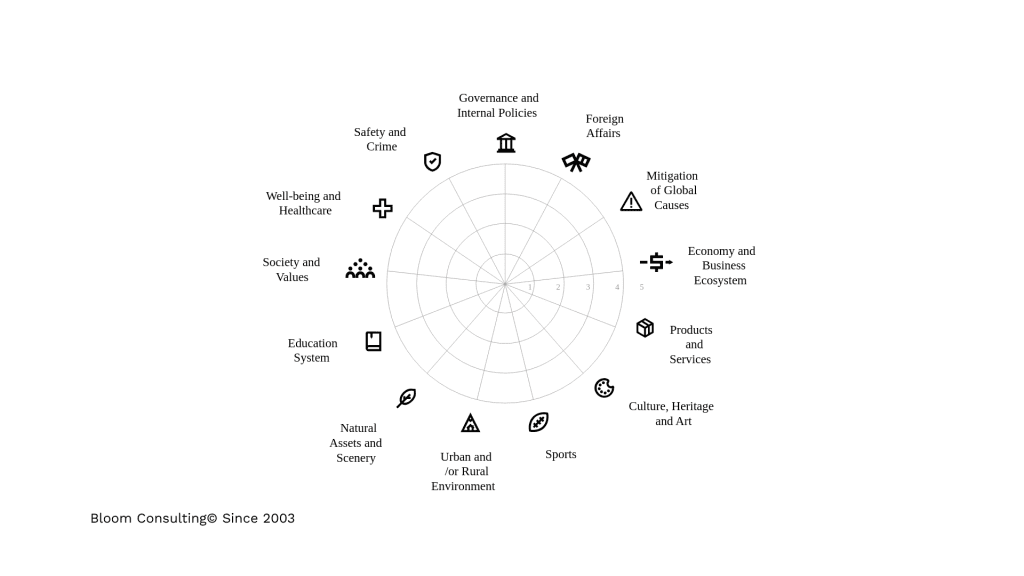
In Bloom Consulting’s Nation Brand Taxonomy Model©, Foreign Affairs is one of 13 Perception Elements through which global audiences form impressions of a country. How a nation behaves under pressure, whether it escalates or mediates, grandstands or delivers, is a powerful signal of the values and capabilities it actually embodies. The restraint and constructive engagement shown by these GCC nations is not just admirable statecraft. It is, whether they intend it this way or not, an enormously effective piece of Nation Branding.
Conclusion: converting attention into Brand perception
In Nation Branding, we speak of the difference between awareness and perception. Awareness is being known. Perception is being valued, associated with specific, positive, credible attributes that influence real decisions about where to travel, invest, study, or do business.
The crisis has delivered awareness for the GCC on an unprecedented scale. Millions of people who had never previously formed a view about those countries now have one. That is the raw material. The question, the urgent, strategic question for every Nation Brand manager in the region, is whether that awareness can be converted into equity before the world looks away.
The geography is now known. The skylines have been seen. The diplomats have been heard. The diversity has been glimpsed. What happens next is a choice, and it is a choice that will define the perception of this region for a generation.
Part II of this series examines the other side of the equation: the reputational risks and damage the crisis has simultaneously inflicted on GCC Nation Brands, and what can be done to manage them.
Disclaimer: I work for some Countries and Cities mentioned in this article, this article was not commissioned nor reviewed by any of them.
Published on 10.03.2026.
Cite article: Torres, J. F. (2026). The crisis that showed the world a different Middle East – Part 1. Bloom Consulting Journal. https://www.bloom-consulting.com/journal/the-crisis-that-showed-the-world-a-different-middle-east-part-1