A forward-thinking Nordic welfare state (Background)
Finland declared its independence in 1917, becoming a full-blown republic in 1919. Before this, the first settlers arrived on what is now Finnish soil around 5000 BCE. In the 12th century, the crusades saw Finland integrated into the Swedish realm and Catholic Europe for over 600 years. Then, in 1809, Sweden lost Finland to the Russian Empire. The Finnish national spirit, however, was alive and well. Finland developed into an autonomous, highly advanced part of the empire, establishing its own parliament and currency.
Its road to becoming the vibrant democracy and welfare state it is today started long before the official declaration of independence. Already in 1640, for example, the first university was established in Finland. 1866 saw the launch of a national school system – independent from the church, and in 1906 Finland became the first country in the world to grant full political rights to women. Like pieces of a puzzle, these facts add up to build the equal, supportive and innovative country of today.
Geographically, Finland is a North European country rich in forests, which cover approximately 75% of its land area, as well as lakes – 188,000 of them! Additionally, the Nordic country is home to the world’s largest archipelago, which counts more than 50,000 islands.
Finnish policy encourages citizens and visitors to spend time in this nature. The so-called “Everyman’s rights” allow roaming the countryside, foraging, fishing with a line and rod, and enjoying Finland’s landscapes responsibly to encourage health and well-being.

Facing a new geopolitical reality (Challenge)
Bloom Consulting’s client – the Ministry for Foreign Affairs of Finland – felt that the country was performing well on the global stage in terms of reputation, and this feeling didn’t come from nowhere. It was attested to by accolades and achievements, such as Finland’s continued winning of the first place in the World Happiness Report, a publication of the UN Sustainable Development Solutions Network, and reaching top positions in Transparency International’s Corruption Perceptions Index, indicating good governance and the high level of trust that exists in Finnish society – both considered foundational elements for happiness.
However, global geopolitical events struck, creating a tense new reality. Could the Nation Brand continue to perform as usual in light of this new scenario? Did these unfamiliar circumstances call for a review and fresh set of actions? The ministry decided to deeply evaluate international awareness of and perceptions towards the Nation Brand in the current context and whether they called for any pivot in policy and messaging.
Bloom Consulting partnered with the ministry to deliver an audit or brand “health check” and guidance on how to proceed in a new era and future proof the Nation Brand. The partnership spanned three months in 2022.
Do public perceptions match the reality of the place? (Strategy)
Our original situational analysis drew data from three proprietary sources:
- D2 Live Quanti ©, which measures perceptions via specially designed surveys,
- D2 Digital Supply ©, which evaluates a Nation Brand’s Digital Identity,
- and D2 Digital Demand ©, which considers a Nation Brand’s Digital Appeal.
We focused the research on 10 key target markets to gauge perceptions of Finland within them. Of the participants, 48% stated that their perceptions of Finland had improved in the last year. Only 3% reported that their perceptions had worsened.
According to the Bloom Consulting Nation Brand Taxonomy Model ©, Finland was found to have a glowing reputation, achieving high marks across all 13 Perception Elements among both people personally familiar with and not familiar with Finland. Well-being, Health, and Healthcare, Education Level, and Natural Assets and Scenery proved to be the strongest Perception Elements, which Finland is recognised and appreciated for.
71% of survey respondents recalled having heard about Finland in the news or in relation to events going on in the country. Topics that came up included the nation’s efforts in international relations, sustainability policies, cultural agenda, and education.
Having considered the results, we came up with a set of recommendations for the ministry to ensure a bright future for the Nation Brand. The first was to keep up the good work in terms of aligning narratives about Finland with its actual actions and policies. Indeed, other nations can learn from Finland’s cohesive and comprehensive management of these narratives, which ensures that there is no disconnect between the image of the place and the reality of it.
Exploring potential new narratives and target audiences (Results)
Thanks to our data insights, we were able to suggest leveraging Finland’s underutilised assets in the realms of Sports and Entertainment to further strengthen perceptions and reach new audiences. Additionally, we identified potential in addressing younger generations whose perceptions are still in the formative stages and could therefore be influenced with suitable content, policies and products.
To present the findings of our research and equip relevant stakeholders with the information needed to refine their narratives about Finland, we ran far-reaching presentations and workshops. Armed with the latest intelligence and our recommendations, brand communicators, such as ambassadors, can better align their content and place the right accents to drive key points across.

“It was really insightful to work with Bloom Consulting and see their conclusions and recommendations. It gave us a fresh and practical approach on how to manage and monitor our Nation Brand.”
Meira Pappi – Finland Country Image Specialist
5 curiosities about Finland
- A Finnish inventor is behind the advent of the text message
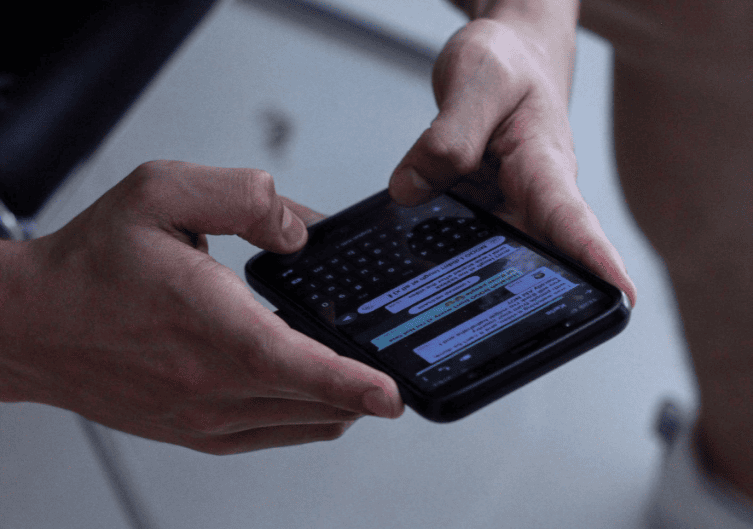
Finnish engineer Matti Makkonen (1952–2015) is known as the “father of the SMS”. The former civil servant is said to have suggested the idea for a mobile phone messaging service at a conference in 1984. He is remembered as a modest man who never claimed to be the sole inventor of the service, always referencing the collective effort it took to develop.
Makkonen never patented the idea because, as he stated in an interview with the BBC “I don’t think I made a patentable innovation, but was one of the early persons to understand the need and the concept.”
While, formally, the first text message was sent from a personal computer to a mobile device in 1992, using the Vodafone network in the UK, Makkonen believed that the real launch of the SMS service was in 1994. In that year, Nokia, the Finnish telecommunications giant, introduced the Nokia 2010 – the first phone that enabled the easy writing of messages.
Source: https://www.bbc.com/news/technology-20555620
- Every year, Finland celebrates the National Day for Failure
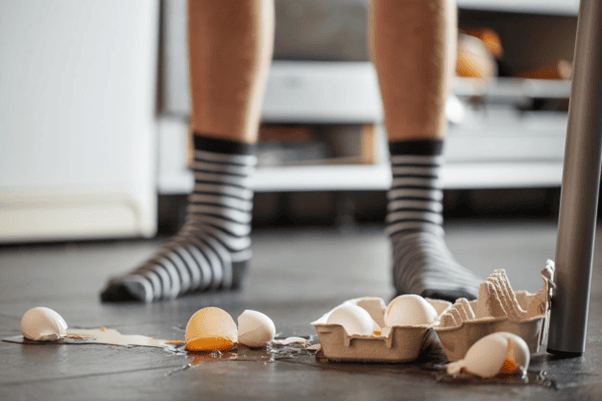
Image by Oksana Osypenko on iStock
Since 2010, 13 October has been the National Day for Failure in Finland. Launched by a group of forward-thinking students at Aalto University, the day is intended to shine a spotlight on failure as a necessary part of progress.
The students believed that fear of such failure was holding many talented people back from realising their ideas and potential, which are essential to ensuring a bright future for Finland.
On the National Day for Failure, household names and high achievers share their stories of overcoming inevitable setbacks as a means to encourage others to go after their dreams. Special events take place at universities and other community institutions to encourage openness, honesty and understanding.
Personalities including Nokia’s chair of the board of directors Jorma Ollila, Angry Birds’ creator Peter Vesterbacka, and coach of the men’s ice hockey team Jukka Jalonen have supported the cause.
Source: https://theculturetrip.com/europe/finland/articles/why-finland-has-a-national-day-of-failure
3. More than 75% of Finland’s land area is covered by forest
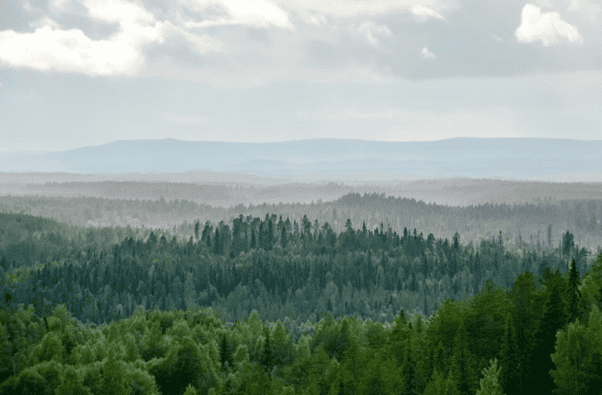
Image by Sitikka on iStock
Forests cover more than 75% of Finland’s land area. That amounts to 22,8 million hectares of forest. For perspective, the size of the entire country of Belgium is 3,0688 million hectares!
26% of Finland’s forests are state owned, and the total number of forest owners is around 620,000.
Approximately 13% of the forests in Finland are protected, and the total size of these protected areas has increased fivefold since the 1980s, indicating the political significance of nature, biodiversity and sustainability.
The most common trees found in the Finnish woods are spruce, pine, downy birch, and silver birch – all native species.
Source: https://www.metsateollisuus.fi/newsroom/facts-about-finnish-forests
- Finland values families
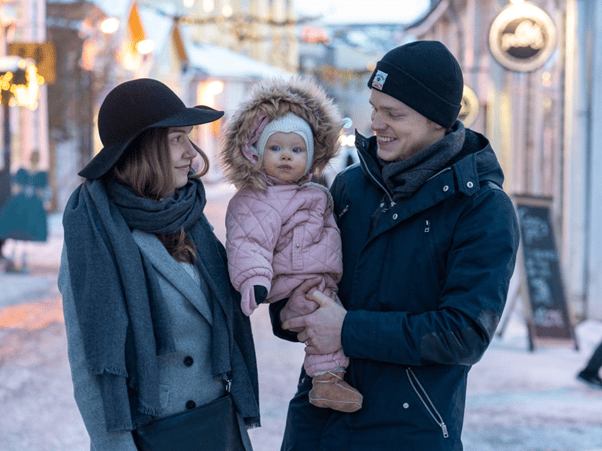
Image: Pasi Markkanen, Finland Promotion Board
Finland offers generous maternity and paternity leave policies and benefits with parental leave lasting 320 working days. This is split equally between the parents. Before the child is born, the parent giving birth can choose to finish working 14 to 30 days before the estimated due date.
Parents receive a maternity package equipped with the first essentials – clothes and child care products – for taking care of their newborn. Alternatively, this can be retrieved in the form of a tax-free cash grant.
Starting from the age of nine months, children have access to municipal early childhood education. From the age of seven, all children must start attending a comprehensive school. This education is free of charge.
Sources: https://www.norden.org/en/info-norden/parental-benefits-finland and https://www.infofinland.fi/en/education/the-finnish-education-system
- Finns play football in swamps
Image by Juhku on iStock
Swamp football emerged when Finland’s cross-country skiers were looking for a way to train in the snowless summer months. Today, the Swamp Soccer Annual Championships are an international event, gathering close to 200 teams from around the globe. This has been happening in the town of Hyrynsalmi since 2000. Each team consists of six players, and they play on 30 m x 60 m fields.
In 2013, the national post office even issued a special stamp dedicated to this peculiar sport, celebrating the fun and humorous side of Finns.
Other curious sports, which Finns indulge in, include wife carrying and boot throwing.
Photo: https://www.shutterstock.com/image-photo/helsinki-finland-may-06-2013-stamp-410154760
Published on 05.10.2023.