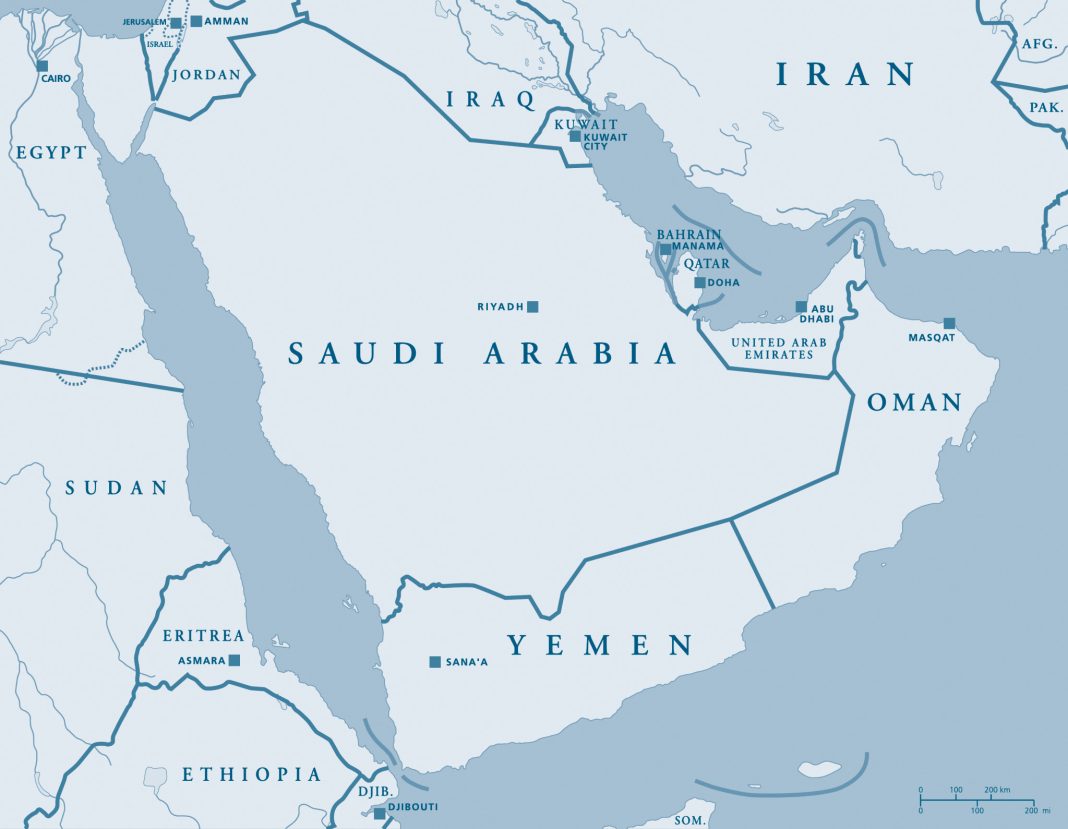
In the first article of this series, I examined the unexpected perceptual opportunities the Middle East crisis has generated for GCC nations: the geography lesson the world never asked for, the stereotype-shattering power of social media, the diplomatic capital being quietly accrued. These opportunities are real, and they matter from a perception stand point. But there is a catch and risk. The “Halo effect” in reverse.
Halo effect in reverse: The frozen perception and the safety trap
The halo effect is one of the most well-documented phenomena in Nation Branding: the process by which positive associations with one aspect of a country’s reputation spread to enhance perceptions of the whole. What the current Middle East crisis illustrates, with uncomfortable clarity, is that the halo effect operates in both directions and that when it runs in reverse, it does not simply damage perception. It freezes it. This is the specific danger facing the GCC today. Not destruction. Freezing.
The cruel irony, as Part I of this series documented, is that the same crisis that is freezing safety perceptions has simultaneously delivered extraordinary gains in geographic awareness, diplomatic credibility, and cosmopolitan visibility for GCC nations. They are winning on several Nation Branding fronts, but the question is…Are they losing, quietly but consequentially, on the one that most directly drives transaction?
Global audiences are not concluding that Dubai is dangerous or that Muscat has become hostile. They are doing something subtler and in many ways harder to reverse: they are pausing. Holding their judgement. Applying what I might call a regional anxiety filter that overrides years of carefully built, country-specific perception and replaces it with a single, undifferentiated question: is it safe?or, once this war is over, will it happen again ?
That question, once lodged in the mind of a potential tourist, a corporate relocation committee, or an international talent prospect, is extraordinarily difficult to dislodge. This is the nature of frozen perception it does not require a negative answer to cause damage. The uncertainty alone is enough to change behaviour. The tourist books Greece instead. The company postpones its Gulf headquarters decision by a year. The executive may decline the Riyadh package. None of them believe the GCC is dangerous. They simply are not sure enough to act.
What makes this particularly frustrating, and particularly unjust, is that the GCC has historically been one of the safest regions in the world. This was a reality. Expats raised families there. Multinationals anchored regional headquarters there and tourists were visiting. The safety record of Gulf cities was, quietly and consistently, one of the region’s most powerful competitive assets.
The stakes here are not abstract. Tourism and Talent Attraction are not peripheral ambitions for GCC nations – they are structural pillars of the strategic visions that define the region’s future. Saudi Arabia’s Vision 2030, the UAE’s national agenda, Qatar’s post-World Cup positioning, Oman’s diversification strategy: all of them depend, fundamentally, on the world perceiving the region as a place where it is safe to arrive, safe to stay, and safe to build a life or a business. A frozen safety perception does not merely slow these ambitions. It strikes at their foundations.
The Perception Elements under greatest pressure
Bloom Consulting’s Nation Brand Taxonomy Model© identifies 13 Perception Elements through which global audiences form impressions of a country. In times of regional crisis, two of these Elements suffer disproportionate damage and carry the highest consequences: Safety and Crime, and Governance and Internal Policies.
These are not incidental choices. In our forward-looking analysis published in the CNP earlier this year – The Future of Perception: Nation and City Branding 2026–2030 – I about same two elements, alongside Foreign Affairs, as the Perception Elements that will be under the strongest pressure globally between now and the end of the decade. Bloon Consulting Dual-Axis Framework, which maps Perception Elements against both Media Exposure and Misinformation Susceptibility, placed Governance, Foreign Affairs, and Safety at the apex of vulnerability, precisely because they are the elements most susceptible to narrative hijacking, fear-based amplification – The kind of regional contagion that the GCC is experiencing now.
Table: 2030 forecast for Nation Brand Exposure vs. Misinformation Risk
The communication vacuum and the danger of silence
One of the most consistent findings from Bloom Consulting’s crisis work and my personal experience with working with governments around the world is that silence is never neutral. Sometimes that silence is positive and it is imperative Countries and Cities do not engage on some dialogues or discourses. But sometime in the absence of clear, specific, credible positioning from a nation about its own identity and circumstances, global audiences fill the gap, with assumption, anxiety, and the path of least cognitive resistance, which is almost always the prevailing regional narrative.
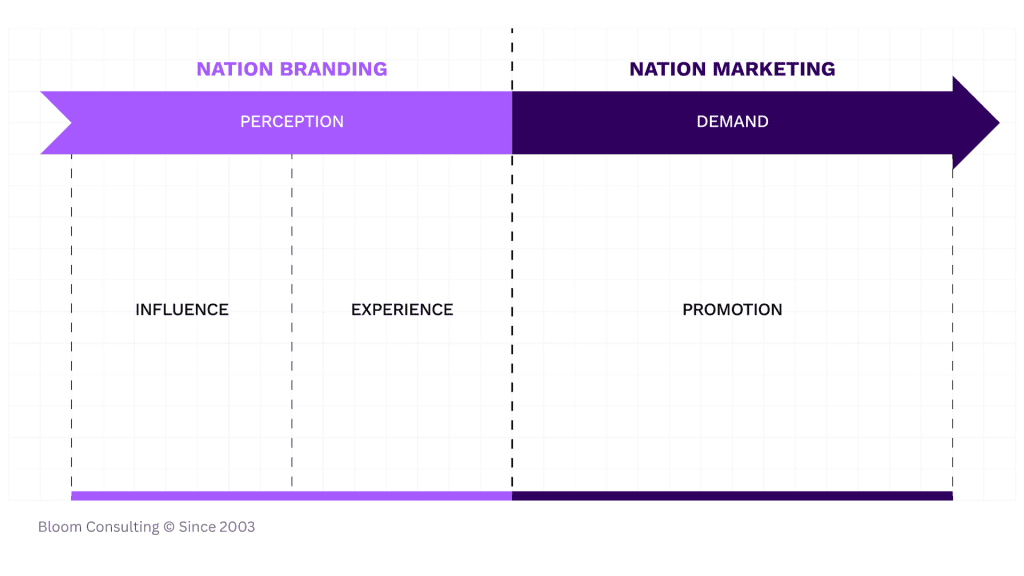
This is, at its core, a Nation Branding 2.0 emergency. The foundational insight of Nation and City Branding 2.0 is that perception is no longer built primarily through physical experience through visiting, investing, or studying in a place. It is built through Influence: the vast, largely ungoverned digital ecosystem of news, social content, search results, platform algorithms, and user-generated narratives through which billions of people form impressions of places they have never visited and may never visit.
The Digital Identity of every GCC nation is being actively shaped right now, not by government communications, but by a torrent of crisis-adjacent content that these governments did not author, did not commission, and cannot easily remove and algorithms are amplifying fear-based narratives at a velocity that no traditional communications programme can match.
In Nation and City Branding 2.0, the digital footprint of a place is its perception for the majority of global audiences. What happens offline must have an online dimension – and what happens online cannot be left to chance.
Managing Nation Brand risk: five principles that work
Based on my experience advising governments through previous crises – from the Australian wildfires to the COVID-19 pandemic, from financial shocks to natural disasters – We in Bloom Consulting have identified a set of principles that consistently determine which Nation Brands emerge from crises stronger, and which emerge diminished.
Five principles of crisis Nation Branding
1. Separate the country from the crisis. Make explicit, consistent, evidence-based distinctions between the regional situation and the specific realities of your country. A clear Central Idea the authentic, distinctive truth that defines what your nation stands for is what makes this differentiation credible and sustainable. Do not leave audiences to make that distinction themselves.
2. “The digital footprint is the brand”. In Nation and City Branding 2.0, the distinction between a Place’s Brand and its digital identity has effectively collapsed. The Digital Identity of a nation or city is the primary channel through which the Influence pathway operates and Influence and it will only become more dominant as a perception-formation mechanism in the years ahead.
For GCC Nation Brand teams, this structural reality demands a specific response: a comprehensive audit of the current digital footprint of each nation and city brand what search results are returning, what content is ranking, what narratives are dominating the social media or A.I, layer followed by a sustained, resourced, and strategically coherent effort to reoccupy that space with content that reflects the actual identity of these places. Not promotional content. Not government statements. But the kind of authentic, platform-native, third-party-amplified digital presence that constitutes credible Influence in the current information environment.
3. Lead with evidence, not assertion. The most effective crisis communication is specific and verifiable: tourism data, safety records, investment flows, international institutional partnerships. Audiences that are anxious do not respond to reassurance – they respond to proof.
4. Activate trusted third-party voices. Government voices are always the least credible in a crisis. International residents, global business leaders, academics, and journalists based in GCC cities are far more persuasive validators of the real conditions on the ground. In a high-misinformation environment, these independent, experience-based voices provide what our 2026–2030 analysis calls a Truth Anchor the kind of verified, direct-experience testimony that is structurally resistant to narrative weaponisation.
5. Establish a Crisis Committee, measure continuously, and prepare for multiple futures. Perception is not static it shifts week by week during a crisis. Governments that monitor their Nation Brand data in real time, through a properly structured crisis management function with clear KPIs and stakeholder alignment, can respond to shifts before they harden into lasting reputational damage. Nation Brands that will perform best are those that build strategies robust enough to remain relevant across several plausible scenarios – not those that plan for the best case and hope for the best.
Final thought
The GCC nations did not choose this crisis, and they are not its protagonists. But in a world where perception is formed at the speed of a social media feed and A.I.”thinking”- and where regional geography is perceived as shared destiny – the choice to manage the reputational consequences actively, or to wait for the storm to pass, will have lasting effects on these countries’ economic trajectories, their international standing, and their competitive positions in the global race for talent, tourism, and investment.
Nation Brand resilience is not a passive quality. It is not something that simply reasserts itself when a crisis ends. It is built – actively and deliberately – through the decisions made at the hardest moments: to communicate clearly when silence is tempting, to differentiate specifically when generalisation is easier, to invest in perception management when the returns are not yet visible.
The countries of the GCC have, as Part I of this series demonstrated, more going for them than most global audiences currently realise. The gap between what these nations are and how they are perceived in this moment is the space in which Nation Branding strategy must operate – urgently, specifically, and without delay.
Disclaimer: I work for some Countries and Cities mentioned in this article, this article was not commissioned nor reviewed by any of them.
Published on 01.04.2026.
Cite article: Torres, J. F. (2026). The crisis that showed the world a different Middle East – Part II. Bloom Consulting Journal. https://www.bloom-consulting.com/journal/the-crisis-that-showed-the-world-a-different-middle-east-part-ii